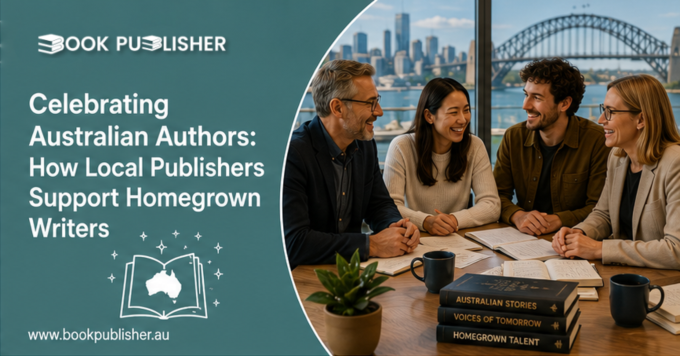
The literary culture of Australia includes a wide range of fiction, non-fiction, poetry, children’s literature, biography, history, and a host of other genres. The local publishing industry is able to link these different voices with an audience by introducing the writers to editors, designers, distributors, booksellers, libraries, and various cultural organizations.
For many authors, completing a manuscript is just the start of the journey. The process of getting that manuscript into the form of a finished book requires decisions regarding editing, design, formatting, distribution, marketing, and audience building.
Fostering local writers ensures that narratives, voices, and experiences relevant to Australian communities are preserved. Australian authors can reflect on current times, local communities, history, culture, and social changes.
Providing support for local authors can help emerging writers develop their work, reach appropriate audiences, and build sustainable opportunities within publishing.
Professional support can be provided by publishers in various stages of the publication process. For example, editorial support can be provided through the assessment of a manuscript, suggesting the areas for improvement, and working with an author to produce a stronger version. After that, proofreading and copyediting can help with improving the accuracy, consistency, and readability.
Another critical stage is production. A publisher can coordinate cover design, interior formatting, illustrations, typesetting, printing, and even digital versions. All these aspects should be in harmony so that the publication will be appropriate for its target audience.
Finally, distribution is very important. Publishers can assist in distributing books among online vendors, independent bookstores, libraries, schools and universities, and other possible distributors. This will help a new title to get to readers who will be hard to find by one person without any additional support.
The work of Australian book publishers goes beyond producing physical books. Publishers help identify manuscripts with potential, develop authors, prepare titles for different formats, and introduce books to the marketplace.
Such individuals can also participate in literary events, book presentations, festivals, and even publicity drives. This helps to make it easier for the reader to get an insight into the story that has gone behind the written material.
For the writer, the right publishing arrangement can give him or her professional insights that could take the work of several different specialists. The degree of assistance offered by the publisher differs, so the author must find out all about the company’s catalogues, submission guidelines, and process of publication.
There are various ways readers can contribute to the publication process through reading books by authors from their regions, patronizing independent bookstores, checking out books from the library, attending literary festivals, and even recommending books to other people.
Celebrating Australian writers is therefore not limited to awards or major literary events. Everyday reading choices also influence which books gain attention. Schools, libraries, book clubs, retailers, and online communities can all contribute to the discovery of new and established writers.
Alternatively, the readers can also experiment with new genres instead of sticking to genres that they are already aware of. This will also introduce them to some unknown authors.
Different types of books require different forms of professional support. A novel may need substantial developmental editing, while an illustrated publication may depend heavily on image preparation and specialist production.
| Book Type | Type of Publishing Assistance Needed | Key Factor |
| Fiction | Editing, cover design, formatting, distribution | Genre and target audience |
| Nonfiction | Editing research, structuring, proofreading | Accuracy and clarity |
| Children’s books | Editing, illustration, design, printing | Age appropriateness and visual impact |
| Audio books | Recording, narration, editing, distribution | Sound quality and accessibility |
| Art books | Image processing, design, printing | Visual impact and reproduction |
This is why authors should compare publishers according to the specific needs of their projects rather than selecting a company solely because it is well known.
An author first needs to determine the type of book he wishes to write, its target readership, and purpose. He may then proceed to conduct some research about appropriate publishing houses that handle such books.
For novelists, researching novel publishers Australia can help identify companies with relevant fiction lists and submission requirements. Authors should examine whether these publishers have experience with their particular genre and whether their publishing approach matches the author’s expectations.
Writers should also ensure that they adhere to the right procedures as far as submission is concerned. There are companies that accept manuscripts unsolicited while others rely on the use of literary agents. Some others accept manuscripts at specific times.
Publishing options may be analyzed by authors considering such aspects as knowledge of genre, editorial help, production facilities, distribution channels, and publishing requirements.
For writers preparing spoken-word editions, audiobook publishing services may provide options for narration, recording, editing, production, and distribution. Authors should consider the quality requirements of the format and whether the intended audience is likely to benefit from an audio edition.
Also, the correct service provider should be considered based on communication, experience in production, distribution, scheduling, and the extent of author participation throughout the process.
Visual projects usually require specialized production processes to a greater extent than text-based books do. The following can influence the end product greatly: image quality, color accuracy, paper used, size of pages, and printing techniques.
Visual artists and creators of highly illustrated titles may benefit from researching Art book publishers in Australia, particularly when specialist printing and image reproduction are important to the project.
It is important for authors to look at previous publications before choosing a publisher. In reviewing the quality of the printed graphics, the binding, the typography, and the presentation as a whole, valuable information about suitability of the publisher can be gathered.
The Australian publishing industry continues to provide pathways for books across traditional and emerging formats. Printed books remain important, while ebooks and audio editions offer additional ways for readers to access content.
The wider concept of Australian literature also continues to expand as writers explore different genres, subjects, communities, and storytelling approaches. This variety gives readers more choices and helps ensure that publishing reflects a broad range of experiences.
The growing interest in best Australian authors also encourages readers to explore both established names and newer voices. Literary recognition can introduce writers to wider audiences, but long-term readership often depends on continued discovery through libraries, booksellers, recommendations, and digital platforms.
For Aussie authors 2026, opportunities can extend across print, digital, audio, independent publishing, literary events, and international readership. However, every publishing route has different requirements, costs, timelines, and responsibilities.
By thoroughly investigating the publishers, preparing professional submissions, understanding contracts, and knowing what services their manuscript needs, authors can increase the likelihood that they will find a fitting publishing partner.
The entire publishing process operates most efficiently when authors know themselves well and can clearly express their own aims. Whether a writer needs development, distribution, specialized production, or help in reaching readers, choosing an appropriate publishing partner can systemize the process.
Local publishing houses can help support writing in Australia by providing professional ways for writers to go from manuscript to readers. They make it possible through editorial expertise, production, distribution, and readership.